Preparing dandelion flowers for drying
Only gather dandelions from somewhere you are confident has not been sprayed with pesticides, weedkiller or other chemicals.
I also avoid busy roadsides and places where dogs are regularly walked.
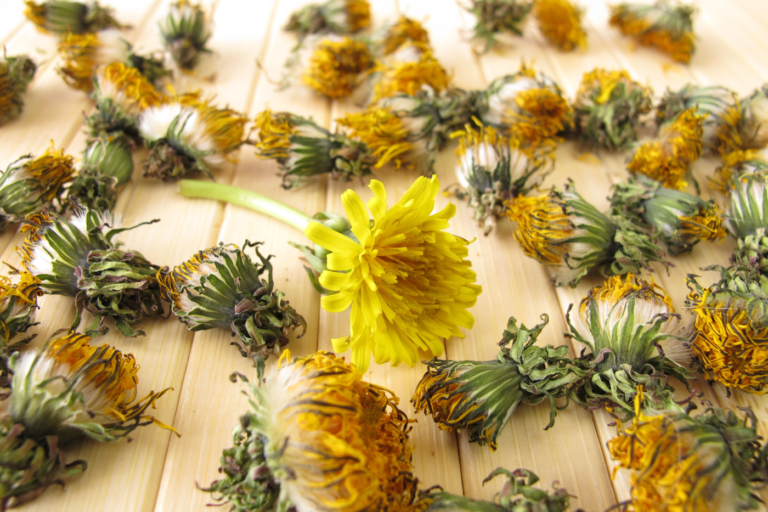
Choose fresh, fully opened flowers and give them a good check for insects before bringing them inside. Dandelions are incredibly popular with bees and other insects so I only ever take a proportion of what is available.
You can dry the whole flower head or remove more of the green base depending on how you plan to use them.
Then comes the interesting part: how to dry them.
Method 1: Air fryer dehydrator setting
This has become my favourite method purely because of the time it saves.
Spread the dandelion flowers across the dehydrator in a single layer, making sure air can circulate around them.
Use the lowest dehydrating temperature available on your machine. Something around 40–50°C works well for flowers and herbs, mine has an actual dehydrator setting.
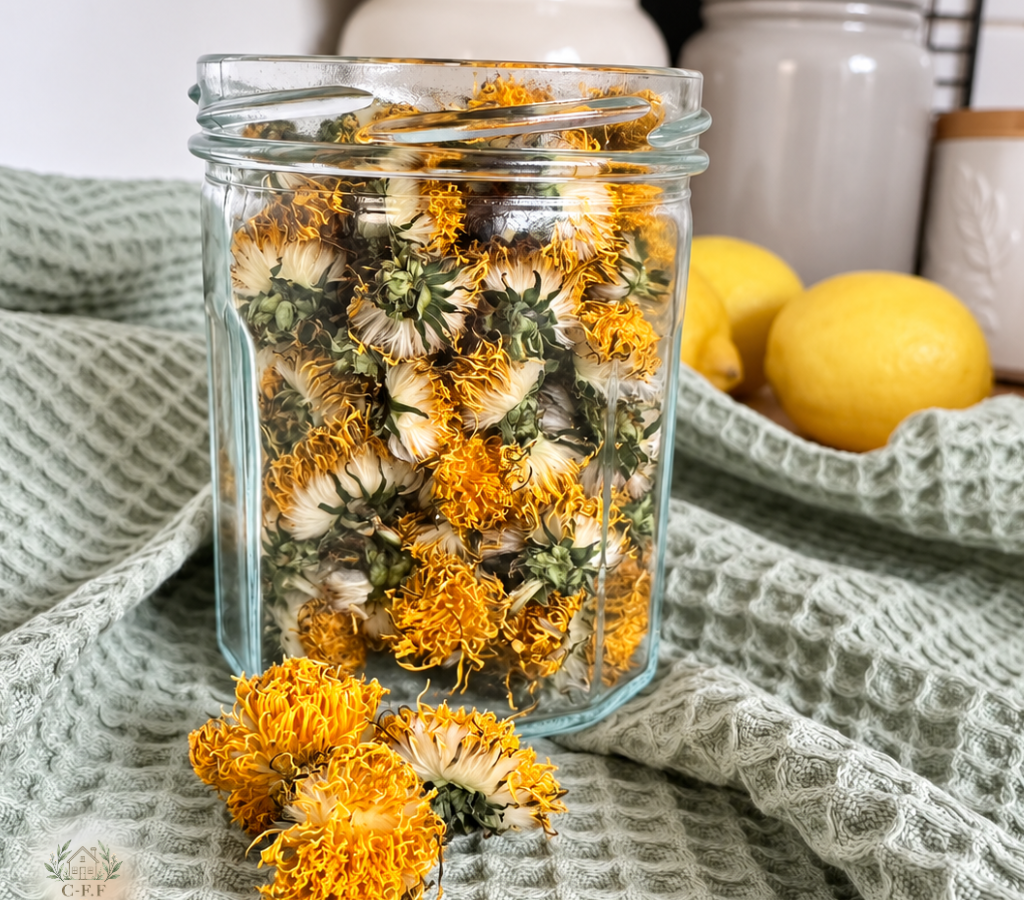
Dry until the flowers are completely crisp and there is no softness or moisture left in the centres.
The exact time will depend on your air fryer, how large the flowers are and how much moisture they contain, so I would check them regularly rather than relying entirely on a set time.
Mine were finished far more quickly than naturally dried flowers, which saved literally weeks.
Once completely dry, allow them to cool before putting them into a jar.
Method 2: Drying naturally
This is the method I used before having the dehydrator option and it absolutely works. It simply requires patience.
Spread the flowers in a single layer on a clean tray, drying rack or piece of breathable cloth, I always used kitchen towel.
Keep them somewhere:
- warm
- dry
- out of direct sunlight
- with good airflow
Turn or move them occasionally so that air reaches all sides.
Depending on your house and the weather, this can take several days to a few weeks.
The important thing is not to rush them into storage. Any remaining moisture can encourage mould in the jar, so they need to be completely dry before being packed away.
Method 3: Drying dandelions in the oven
You can also use the oven, although this is probably my least favourite method.
Spread the flowers over a baking tray and put them into the oven at the lowest temperature possible.
Leave the oven door slightly open so moisture can escape.
The problem I find with this method is that domestic ovens are not particularly good at maintaining the very low temperatures we ideally want for drying herbs and flowers.
It can also take a surprisingly long time and the temperature tends to fluctuate far more than it does in a dehydrator.
It works if it is your only option but personally I would choose natural drying over the oven if I did not have a dehydrator setting available.
If you have a dehydrator
Even better.
A dedicated dehydrator gives you excellent control over both temperature and airflow and is ideal for herbs and flowers.
Again, arrange the dandelions in a single layer and use a low temperature of roughly 40–50°C.
Dry until completely crisp before cooling and storing.
Storing dried dandelion flowers
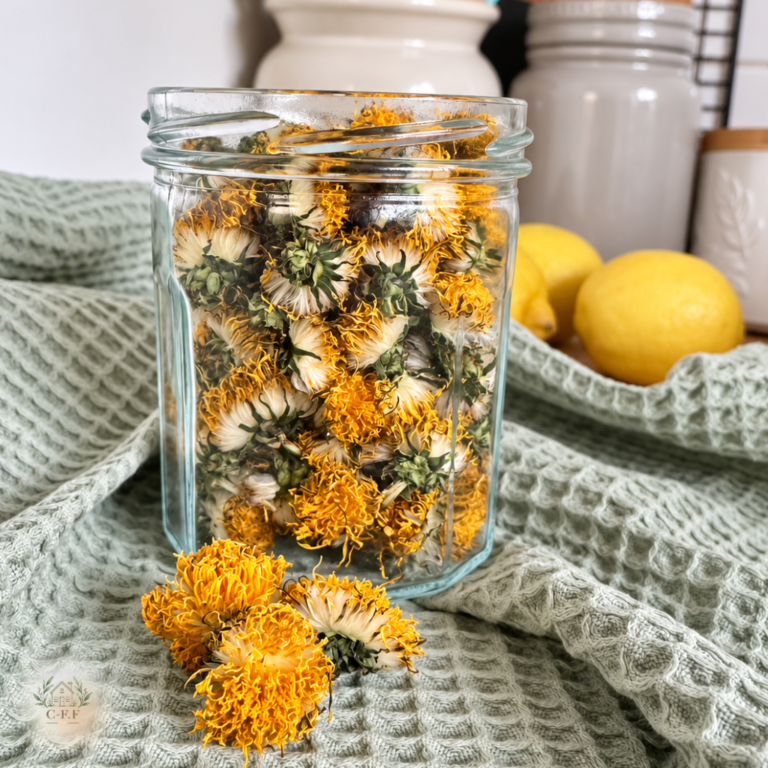
Once the flowers are completely dry and cool, store them in a clean airtight glass jar.
Keep the jar somewhere cool, dry and away from direct sunlight.
I also label mine with the contents and the year they were harvested. That makes rotating dried herbs and flowers much easier and means I always know which batch I am using.
If you ever see condensation inside the jar, the flowers were not dry enough and need to come back out immediately.
How to use dried dandelion flowers
Probably the easiest way to use them is in tea.
Add a small handful of dried flowers to a teapot or infuser, cover with freshly boiled water and leave them to steep for around 5–10 minutes.
The flavour is mild and slightly earthy and they blend beautifully with other dried herbs and flowers.
You can try combining them with things such as:
- dried rose petals
- chamomile
- mint
- lemon balm
- nettle
- ginger
- a little honey and lemon
They can also be added to homemade herbal blends or used anywhere you would normally use dried edible flowers.
Dandelions are useful in far more ways than tea
Drying the flowers is only one way of using them.
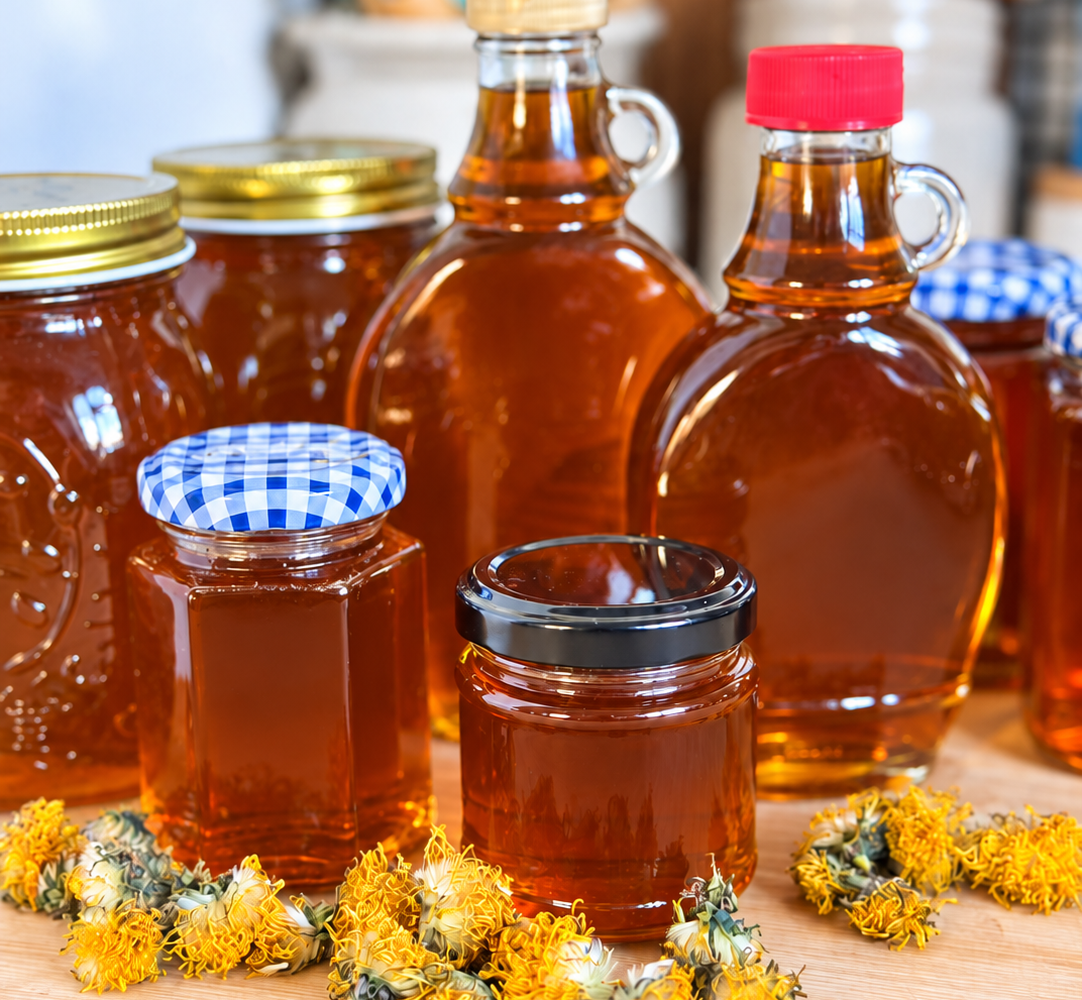
When they are abundant I also make Dandelion Honey, a beautiful golden syrup made from the flower heads, lemon and sugar.
You can find my [Dandelion Honey recipe and method] here.
The more I learn about plants such as dandelions, the harder it becomes to look at them as weeds. They are food, flowers for pollinators and a useful ingredient all growing right under our feet.
If you dry some…
If you try drying dandelions this year, I would love to know which method you use.
The air fryer dehydrator setting has definitely changed the process for me because taking something that previously took weeks and reducing it to hours makes preserving a much more realistic part of everyday life.
Leave a comment below and let me know how you use your dried flowers too. I am always interested in finding another way to use what is already growing around us.