Recipes
Homemade Elderberry Syrup

One of the things I love most about foraging is the way it helps us notice the seasons properly.
Getting outside, looking at what is growing around us and bringing a little of it home seems to help both our minds and our bodies shift with the year. By the time the elderberries are hanging in those deep purple clusters, summer is beginning to fade and we are heading towards the cooler months.
And elderberry syrup is one of those recipes that belongs perfectly in that transition.
Elderberries have been used traditionally for generations during the autumn and winter months. They are naturally rich in plant compounds such as anthocyanins. I love turning them into a simple syrup that we can keep in the fridge as the seasons changes to ward off colds and flu.
It is super tasty too. You can go out with a basket and gather some growing freely around you, bring it home and turn it into something useful for your family.
And that, for me, is one of the very best things about learning to forage.
Gathering elderberries
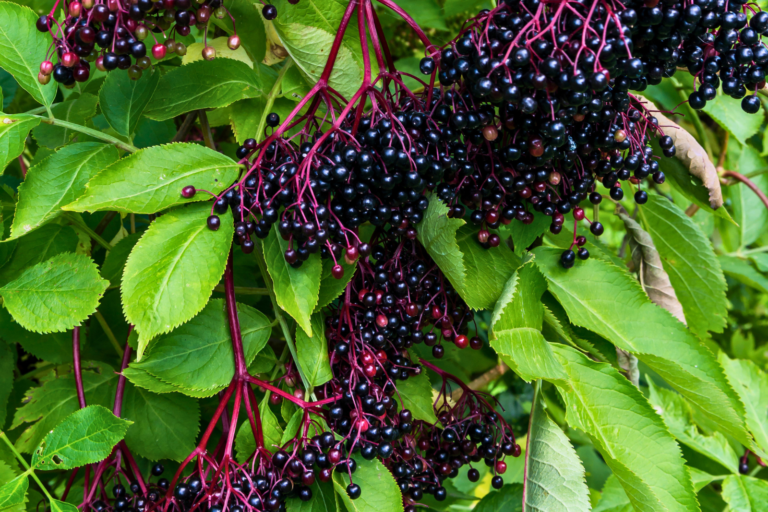
Once you know what you are looking for, elderberries are surprisingly easy to spot towards the end of summer and into early autumn. The berries ripen into deep purple-black clusters that hang from the branches, often weighing them down as they become fully ripe.
I only pick berries that are properly ripe and once home I remove them from the stems before cooking them.
Elderberries should be cooked before eating, so this is not one for nibbling straight from the hedgerow. It is also important to be completely confident in your identification before eating anything you have foraged.

Method
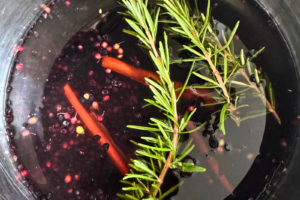
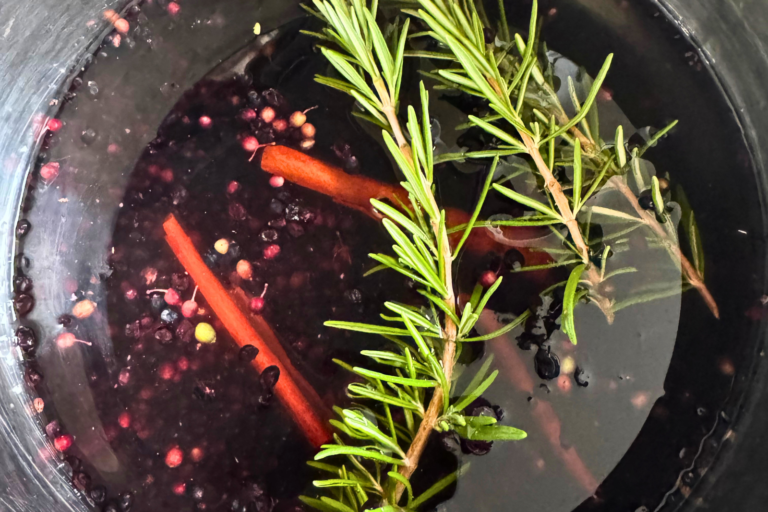
- Add the elderberries, water, cinnamon and rosemary to a pan and simmer gently foe 30-40 minutes.

- When the liquid has reduced by about half, allow to cool
- Once cooled strain through a sieve or muslin cloth
- When completely cooled, stir in the raw honey to taste.
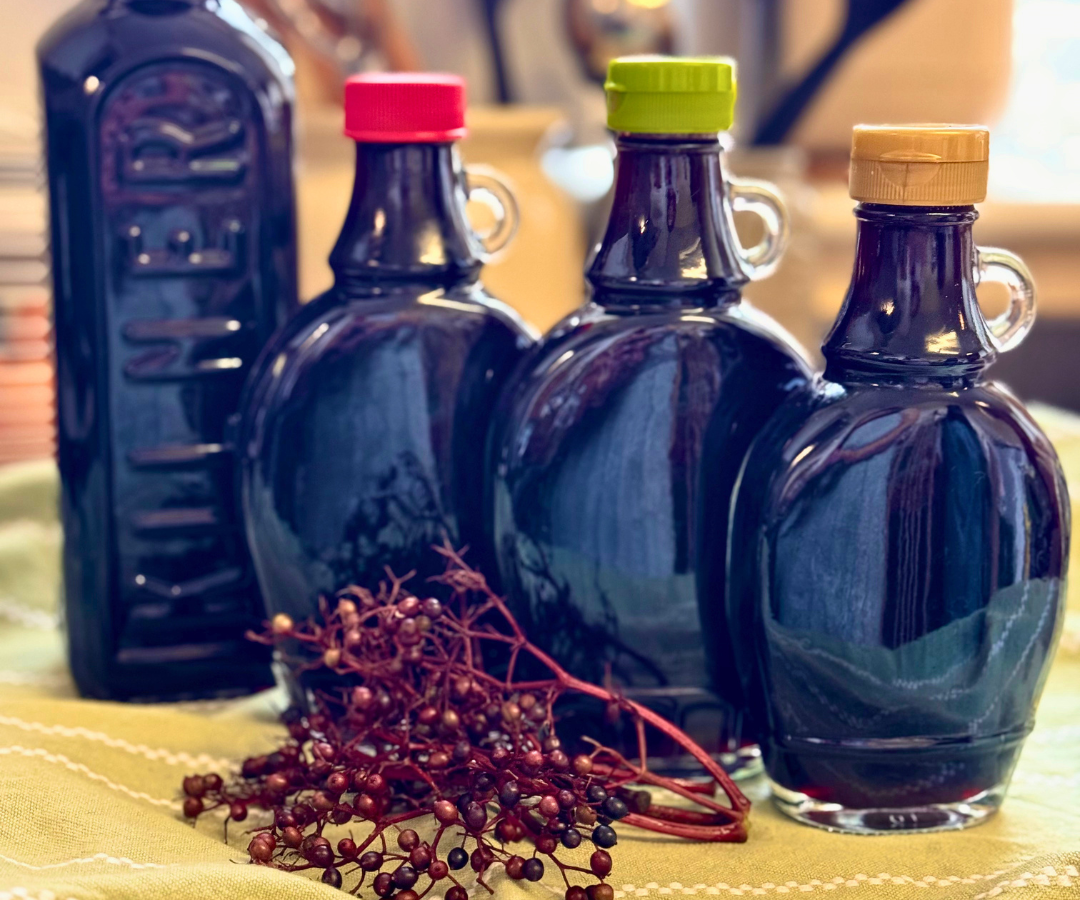
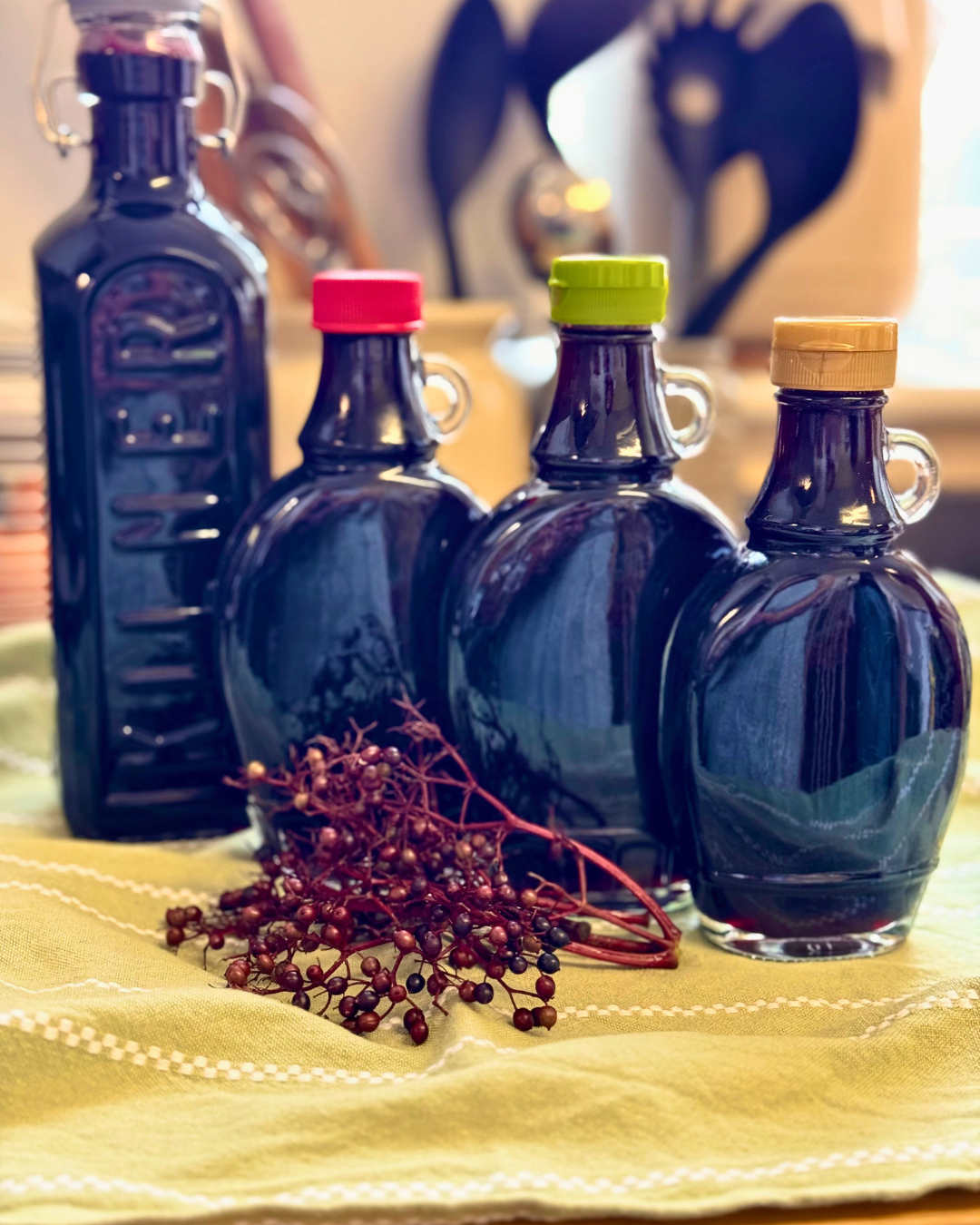
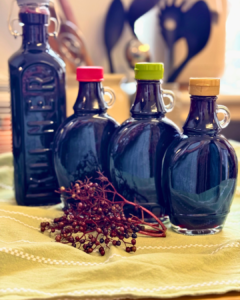
- Bottle into sterilised jars or bottles

- Dosage: 1 tbsp daily for adults, 1 tsp daily for children – can increase to 3-4 times a day when needed *Do not give raw honey or honey to children under the age of 1
Freezing elderberry syrup
Elderberry syrup freezes really well, which is handy if you make a larger batch and do not want to keep all of it in the fridge at once.
My favourite way to freeze it is in ice cube trays. Once frozen, pop the cubes out and transfer them to a labelled freezer bag or container.
It means you can take out just a small amount at a time rather than defrosting a whole jar, which is much more useful for something you are likely to use in little amounts.
Once thawed, keep it in the fridge and use it within a few days.
Why these ingredients?
This syrup is made from such a small number of ingredients but each one brings something of its own to the jar.
Elderberries are naturally rich in anthocyanins, the deep purple plant pigments that also act as antioxidants. They also contain other polyphenols and vitamin C. Elderberry has a long history of traditional use during the autumn and winter months we use it to support ourselves well through the colder season.
Rosemary brings far more than flavour. It contains aromatic plant compounds and polyphenols such as rosmarinic acid, it has traditionally been used in herbal preparations for coughs and chest congestion. Its aromatic oils are often described as helping to loosen mucus and make phlegm easier to clear, which is one of the reasons rosemary has long appeared in winter remedies. I also love the earthy, herbal note it gives the syrup, especially alongside the sweetness of the berries and honey.
Cinnamon does far more than make the syrup taste lovely. It contains cinnamaldehyde and a range of polyphenols, which have antioxidant activity and may help reduce oxidative stress in the body. Cinnamon has also been studied for its anti-inflammatory and antimicrobial properties, some research suggests it may have a modest effect on blood-sugar control in certain people. Traditionally, cinnamon has also been used in warming remedies for coughs, colds and digestive discomfort. In this recipe, it adds both flavour and a useful range of plant compounds alongside the elderberries, rosemary and honey.
Raw honey rounds everything off and takes away some of the sharpness of the berries. Honey also contains small amounts of naturally occurring plant compounds, and there is evidence for honey being useful for soothing coughs in adults and children over one year old. I add mine only after the syrup has cooled rather than simmering it with the berries.
Together they make a syrup that feels very much at home at this point in the year: dark seasonal berries, warming spices, herbs and honey, all brought together in one jar.
A little note on elderberry
Elderberries should always be properly identified and cooked before eating. The raw or unripe berries, leaves, stems and other parts of the plant can contain compounds that may cause nausea and digestive upset.
If you make it…
I’d love to know if elderberry syrup becomes part of your autumn and winter kitchen too.
If you make a batch, leave a comment below and let me know how you made yours, whether you kept it simple or added your own herbs and spices, and how you like to use it.
There is something very satisfying about taking what is growing around us, bringing it home and turning it into something useful for the months ahead.

You may also like
Breakfasts
Homemade Granola
Granola is one of those things that because it is so easy to buy, it is equally as easy to forget just how simple…
Read more →
Breakfasts
Breakfast Scones
Easy Breakfast Scones There is something about a warm scone at breakfast that feels far more special than the amount of effort involved would…
Read more →
Drinks
Homemade Ginger Beer
Ginger beer has to be one of the most fun things to make at home because there is something just so magical about taking…
Read more →