Skip to content

Herbs, Flowers & Seasonal Makes

Homemade Rose Water
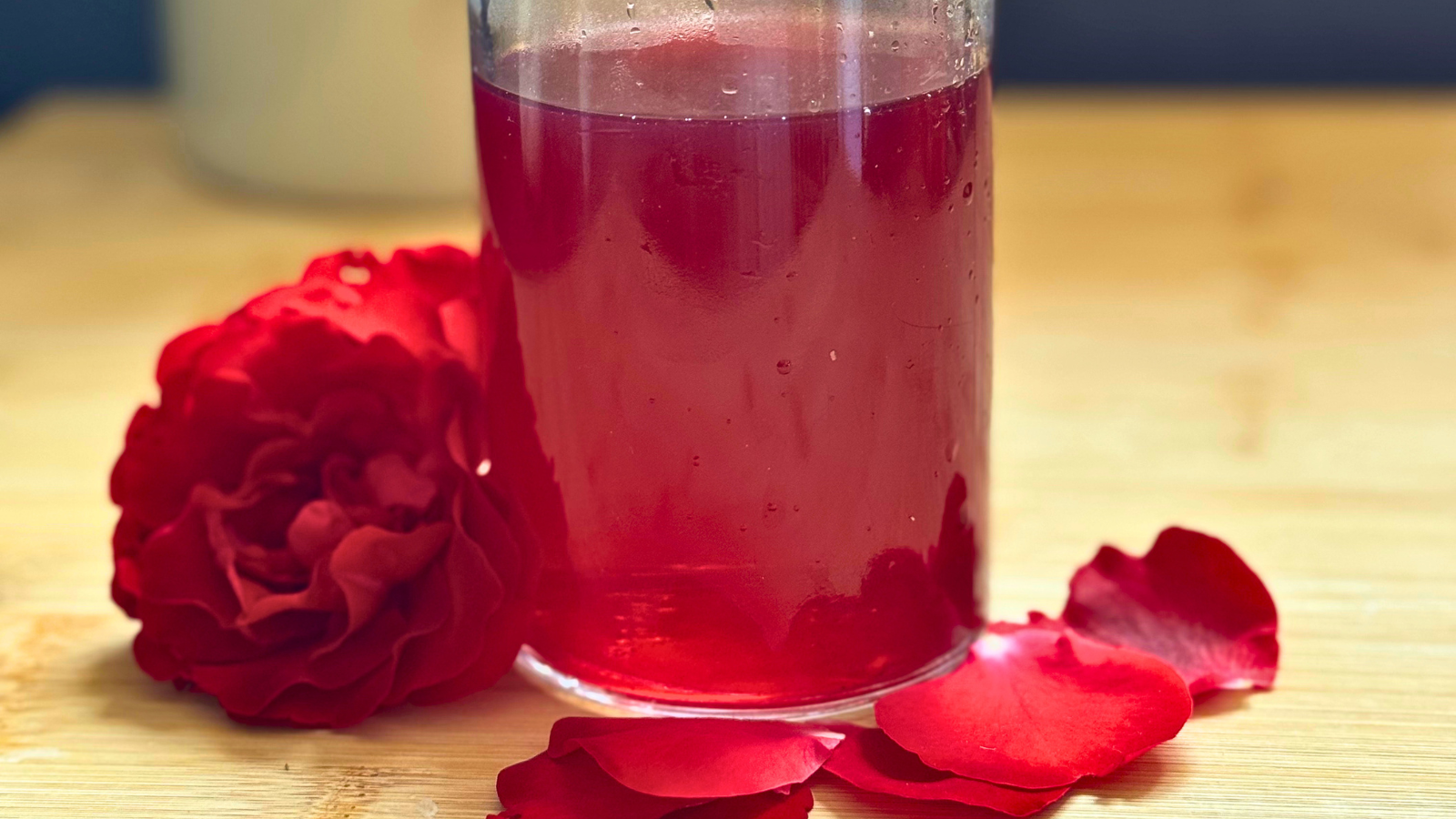
Roses bring so much joy in so many different ways.

There is the obvious beauty of seeing them in flower and then that incredible scent when you walk past them. But the more I have learned, the more I have realised just how useful those petals can be too.

We use them for homemade rose water, dry them for tea and I also love adding petals to sugar to make rose sugar and rose bath salts. It means the flowers are not simply something beautiful to look at for a few weeks. We can harvest them and keep using them long after the blooms would normally have faded.

Homemade rose water has probably become my favourite use though.

As a facial toner it has been better than anything else we have used for leaving our skin feeling soft and helping to calm breakouts. With teens and pre-teens in the house, that has also made this a very high-priority make as far as they are concerned!

Rose petals contain a range of naturally occurring plant compounds, including polyphenols and flavonoids, which are known for their antioxidant properties. They also contain tannins and aromatic compounds that have traditionally been used in skincare because of their soothing and mildly astringent qualities.

That combination is part of what makes rose water so useful as a simple facial toner. It feels gentle, fresh and cooling on the skin without needing a long list of added ingredients.

And that is probably what I enjoy most about making it. We get the beauty of the roses while they are growing, the scent while they are flowering and then, instead of simply letting the petals fall, we can turn them into something genuinely useful.

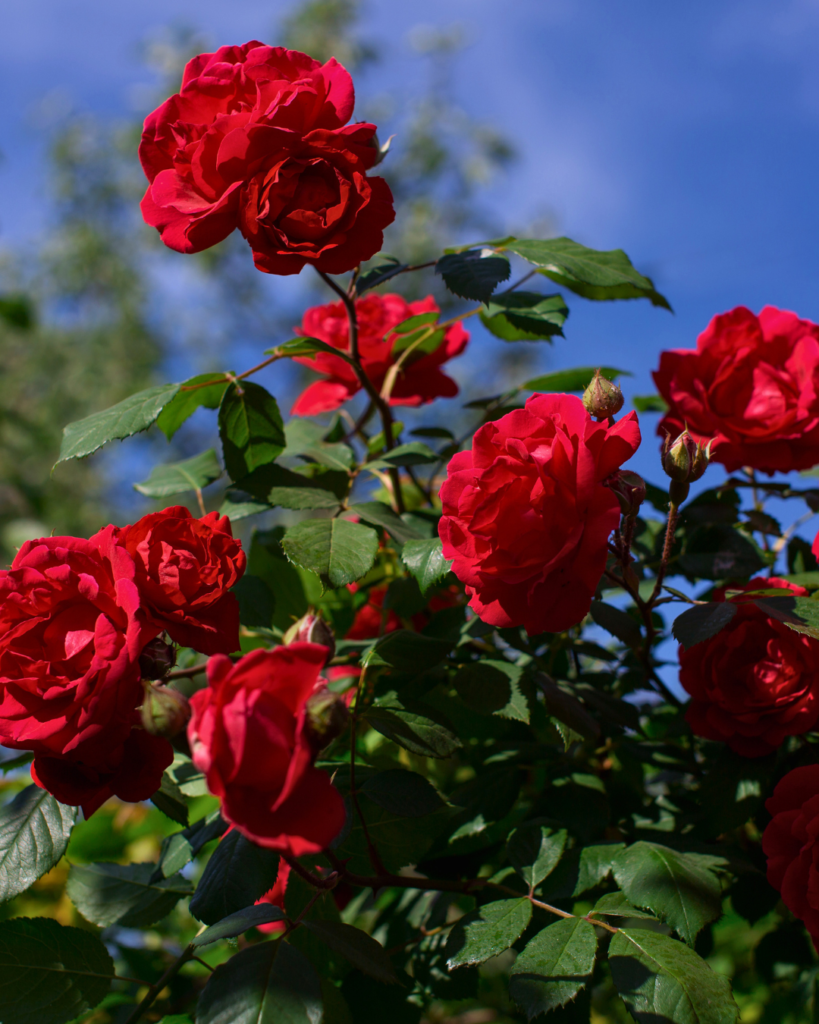
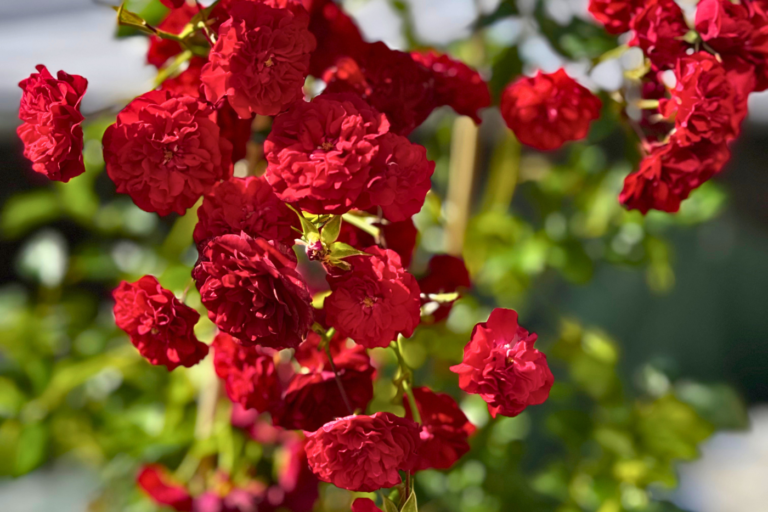
Rose Water Red Roses

Choosing roses for rose water

The most important thing is knowing exactly what has been used on the roses.

If I am going to put rose water on our skin or use it in the kitchen, I only want petals from flowers that have not been sprayed with pesticides or other chemicals. For me, that makes home-grown roses the easiest choice because I know exactly how they have been treated.

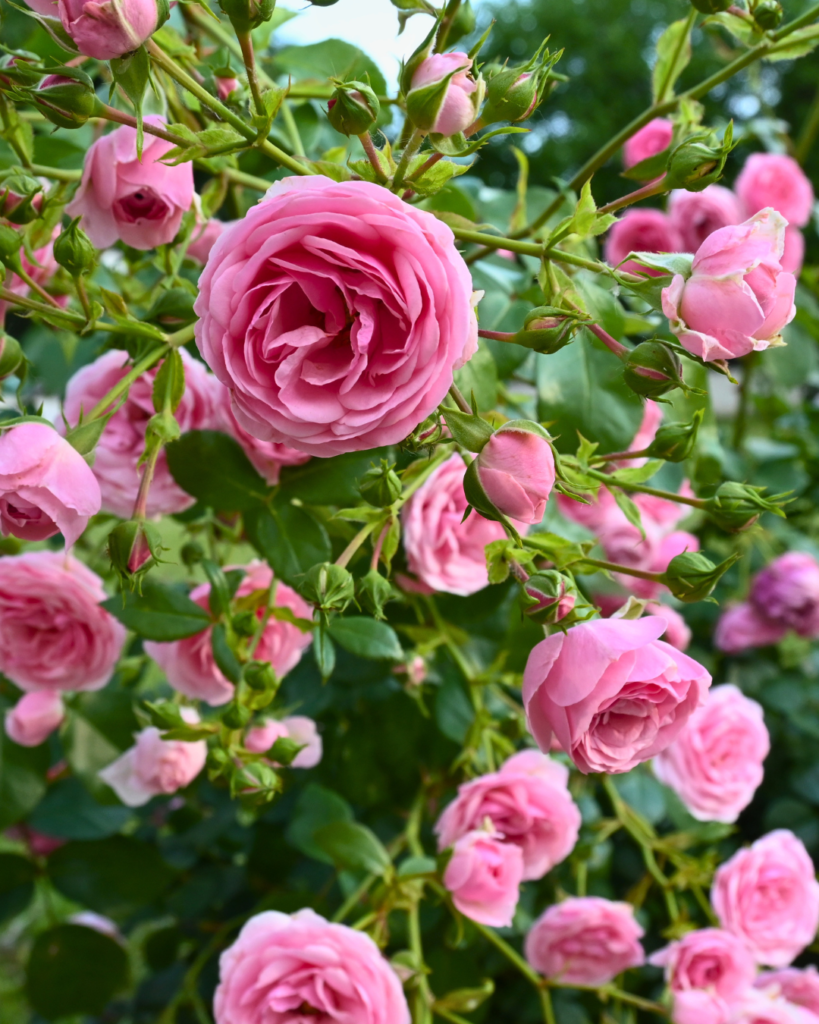
I also look for roses with a really strong scent. The fragrance in the petals is what gives the finished rose water so much of its character, so the more beautifully scented the flower, the better.

Fresh petals are best. I pick them when the flowers are open and looking healthy, before they start browning or dropping. If there are any damaged petals, insects or bits of stem mixed in, I remove those before using them.

Colour matters far less to me than scent and quality. Deep pink and red roses can give the water a lovely tint, while paler roses may produce something much lighter but I would always choose the most fragrant, unsprayed petals over a particular colour.

And if you are gathering roses anywhere other than your own garden, make sure you know they have not been treated with chemicals and that you have permission to pick them.

Why rose water is so good for skin

Rose water has been used in skincare for generations and it is very easy to understand why once you start using it.

As a facial toner, it feels fresh, cooling and incredibly gentle. I find it leaves my skin noticeably softer and for me, it has also been one of the best things I have used for helping calm breakouts. With teens and pre-teens in the house, as mentioned that alone makes rose water a very popular make here.

Rose petals contain a range of naturally occurring plant compounds, including polyphenols, flavonoids and aromatic compounds. These are associated with antioxidant activity and help explain why rose has such a long history in traditional skincare.

Rose water can also have a mild astringent effect, which is one of the reasons it works so well as a toner. It can help the skin feel fresh and clean without the stripped, tight feeling that some stronger toners leave behind.

The naturally occurring aromatic compounds in rose are also associated with soothing and anti-inflammatory properties, which is why rose water is often used on skin that feels irritated, warm or generally unhappy.

There is also evidence from laboratory research that compounds found in rose have antimicrobial activity. I would not present rose water as an acne treatment in itself, but from my own experience it has made a real difference to how calm and soft my skin feels and to the number of breakouts I get.

And unlike so many skincare products, homemade rose water is wonderfully simple. If I have made it from our own unsprayed roses, I know exactly what has gone into the bottle.

A few of the reasons I use it

  • as a simple facial toner after cleansing
  • to freshen and cool the skin
  • because it leaves my skin feeling soft rather than dry or tight
  • to help calm skin that feels irritated
  • as part of the girls’ skincare routine
  • as a base for other homemade skincare products
  • simply because it smells absolutely divine

It is a staple in our house and I genuinely wouldn’t be without which is why preserving it it so important as discussed later.

Homemade Rose Water

Prep Time10 minutes

Materials

  • 2 Generous handfuls fresh, unsprayed rose petals
  • Enough distilled or filtered water to just cover the petals

Instructions

  • Gently check through the petals and remove any insects, damaged petals or bits of stem.
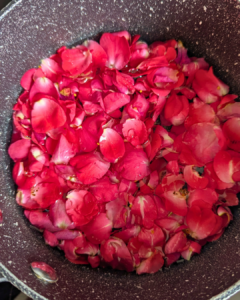
    Homemade Rose Water Petals.
  • Place the petals into a saucepan and add just enough distilled or filtered water to cover them.
  • Put the pan over a low heat and gently warm the water. You do not want a rolling boil.
  • Leave the petals to simmer very gently for around 10–15 minutes, or until most of the colour has faded from the petals and moved into the water.
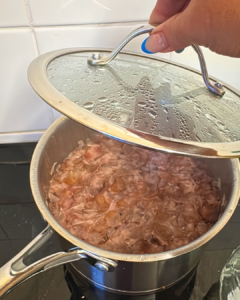
    Homemade Rose Water Process
  • Remove from the heat and allow the mixture to cool.
  • Strain through a fine sieve or muslin into a clean jug.
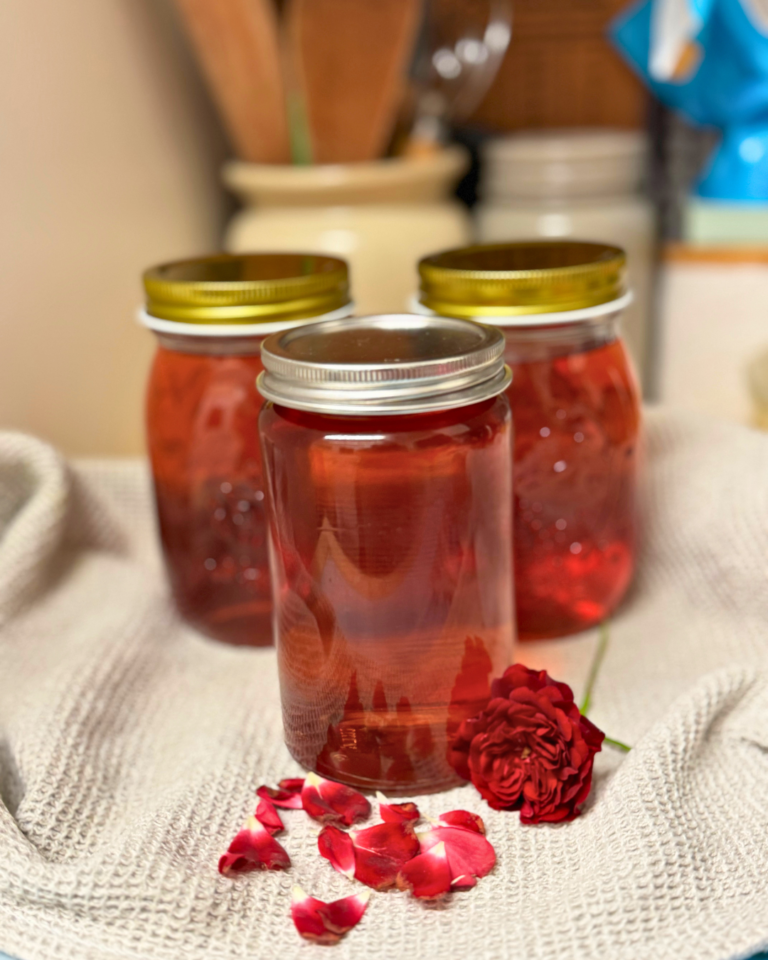
  • Pour the rose water into a sterilised glass bottle or jar.
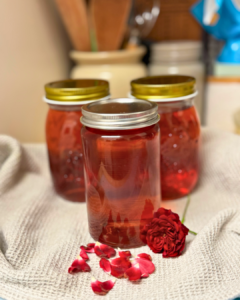
    Homemade Rose Water Jars
  • Once completely cool, store in the fridge.
Preserving and storing rose water

Because rose water is such a staple in our house, I do not want to rely on only making it while the roses are actually flowering.

My favourite way to preserve it is actually to freeze the petals straight after picking. I gather them while they are fresh, check them over and freeze them in bags. Then, when I need a new batch of rose water, I can simply take out the frozen petals and make it exactly as I would with fresh ones.

I prefer this method because it means I can make fresh rose water throughout the year rather than having to make a huge amount all at once.

The second way I preserve it is by freezing the finished rose water itself.

I pour it into ice cube trays, freeze it completely and then pop the cubes into a labelled freezer bag. That way I can take out a small amount at a time without defrosting a whole bottle.

Both work really well, but freezing the petals is definitely my favourite because it means I can keep making fresh batches long after the roses have finished flowering.

Homemade Rose Water Jars

If you make it…

Rose water is another fantastic homemade make that is so much simpler than many people realise.

Once you have made a batch and seen just how easy it is, I am fairly sure it will become a staple in your home too. It is useful, beautifully scented and such a lovely way to make more of something that might otherwise simply fade and fall in the garden.

If you make your own rose water, leave a comment below and let me know how you use yours. I would especially love to hear if it ends up becoming part of your skincare routine too.

Share this Facebook Pinterest